Film Trailer
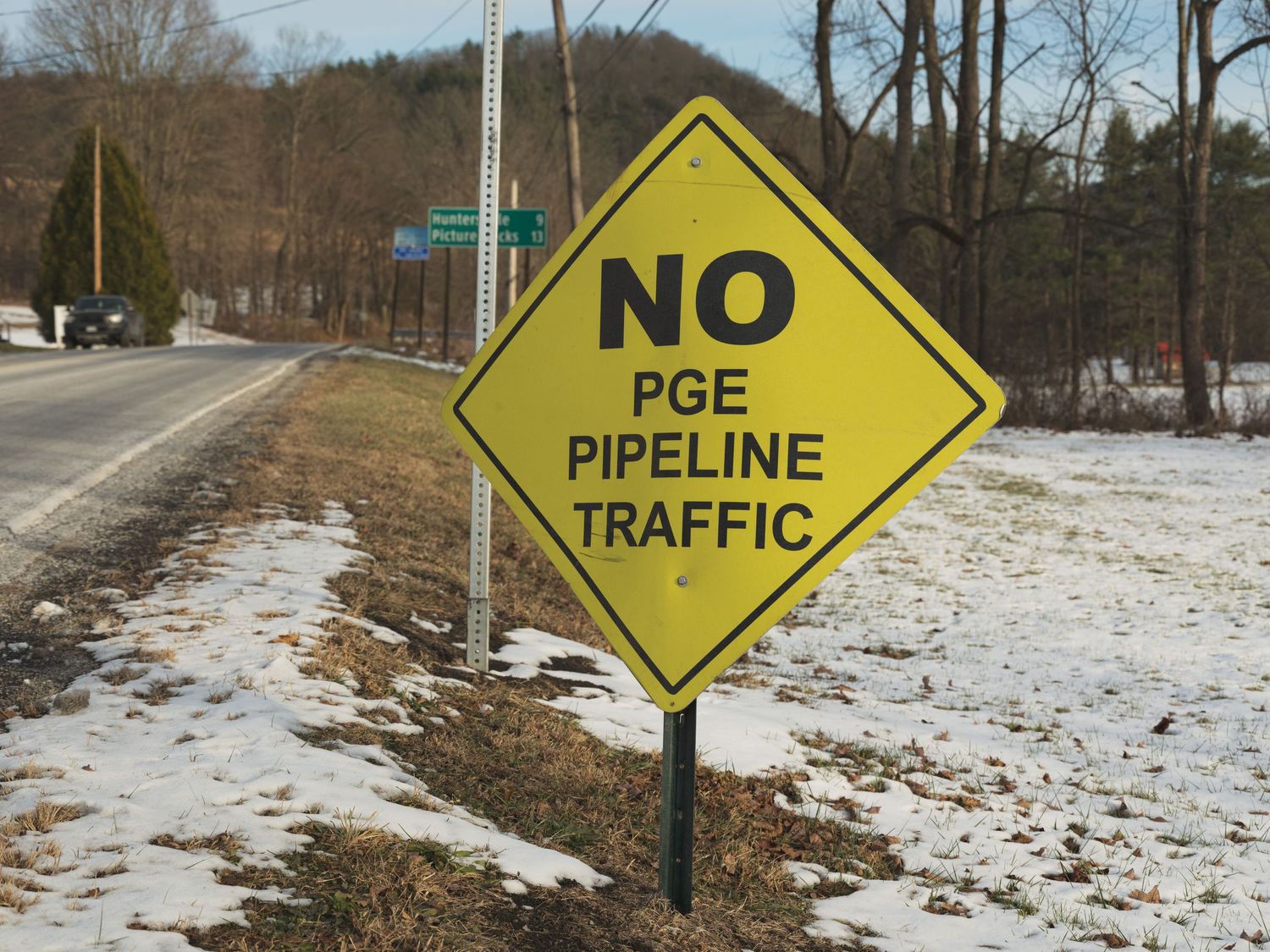
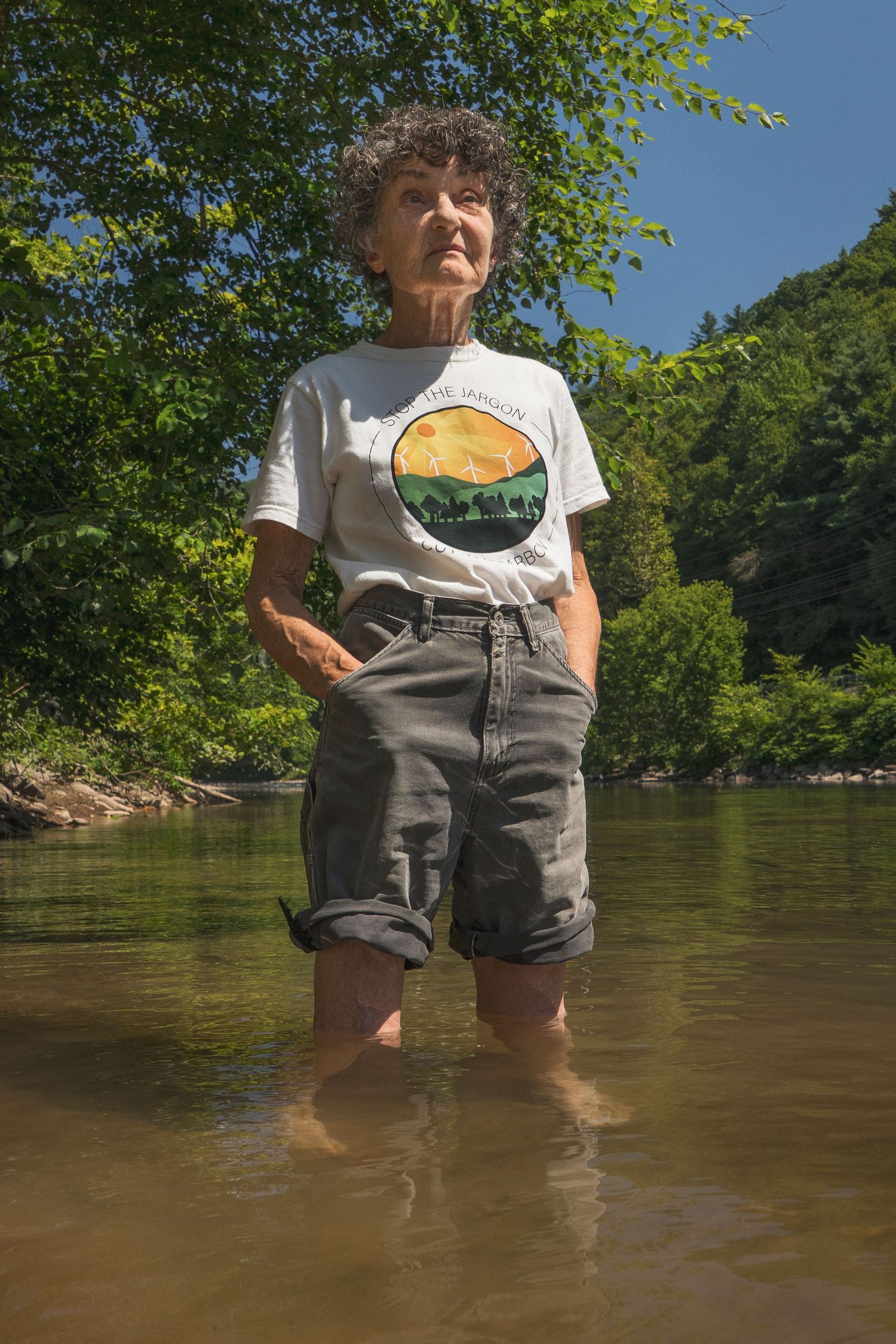
“Here we are. We’re living at the epicenter of one of the most toxic industries there is. What is it doing to us?” - Barbara (Barb) Jarmoska sips homemade iced tea from as she describes the heightened levels of stress of living atop the Marcellus Shale, one of the largest deposits of shale gas in the US. Her home, and her small neighborhood on Butternut Grove Road sit beside 2018’s Pennsylvania River of the Year, the Loyalsock Creek. To the east and south are the Allegheny and Tarklin ridges, and to the west and north lie the slopes of Jacoby Mountain, mountaintops that are the current object of a shale play that Pennsylvania General Energy (PGE) calls The Saluda Prospect. It places Barb’s neighborhood at the center of a 16 mile web of drill rigs, frack pads, pipelines, and water impoundments.
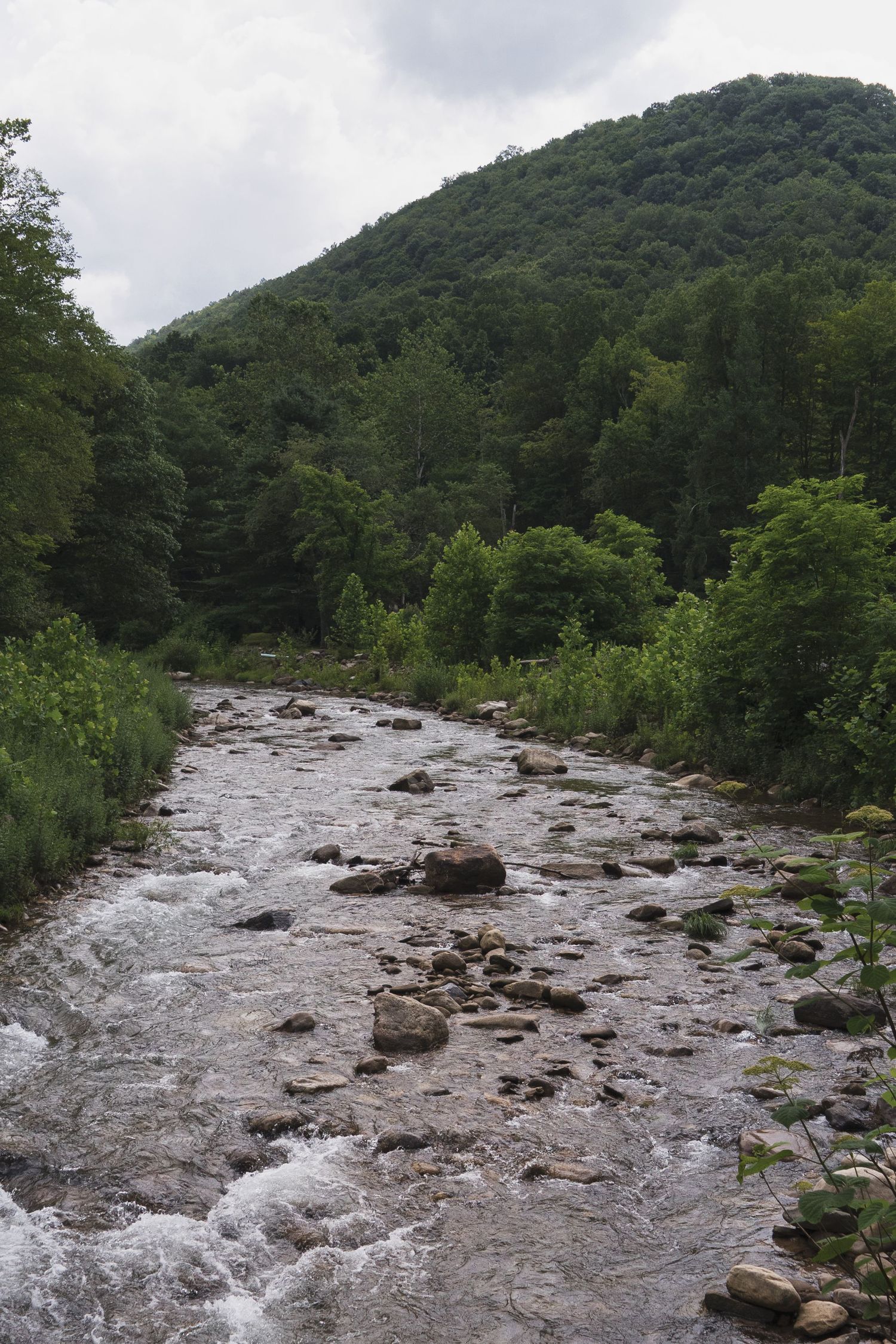
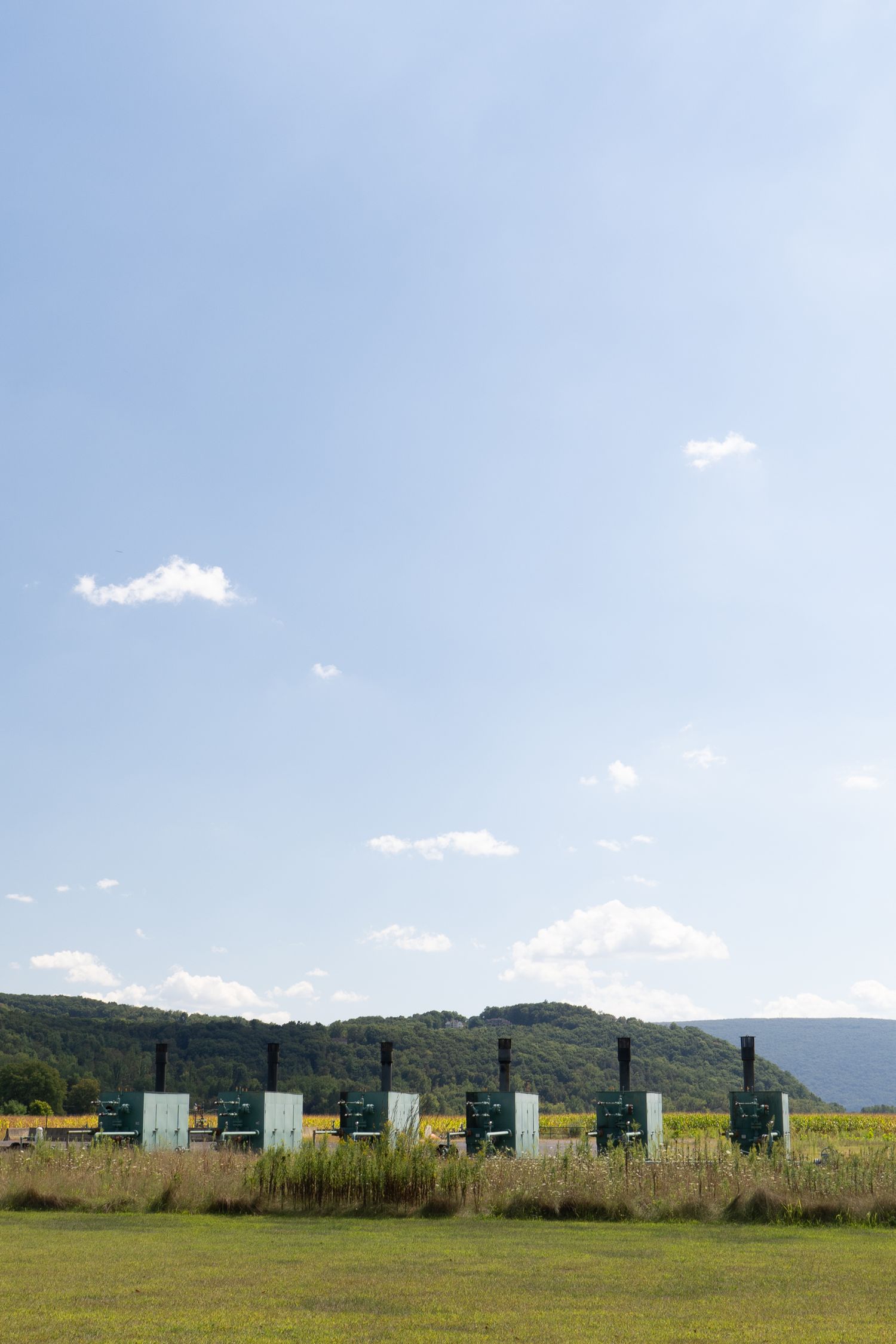
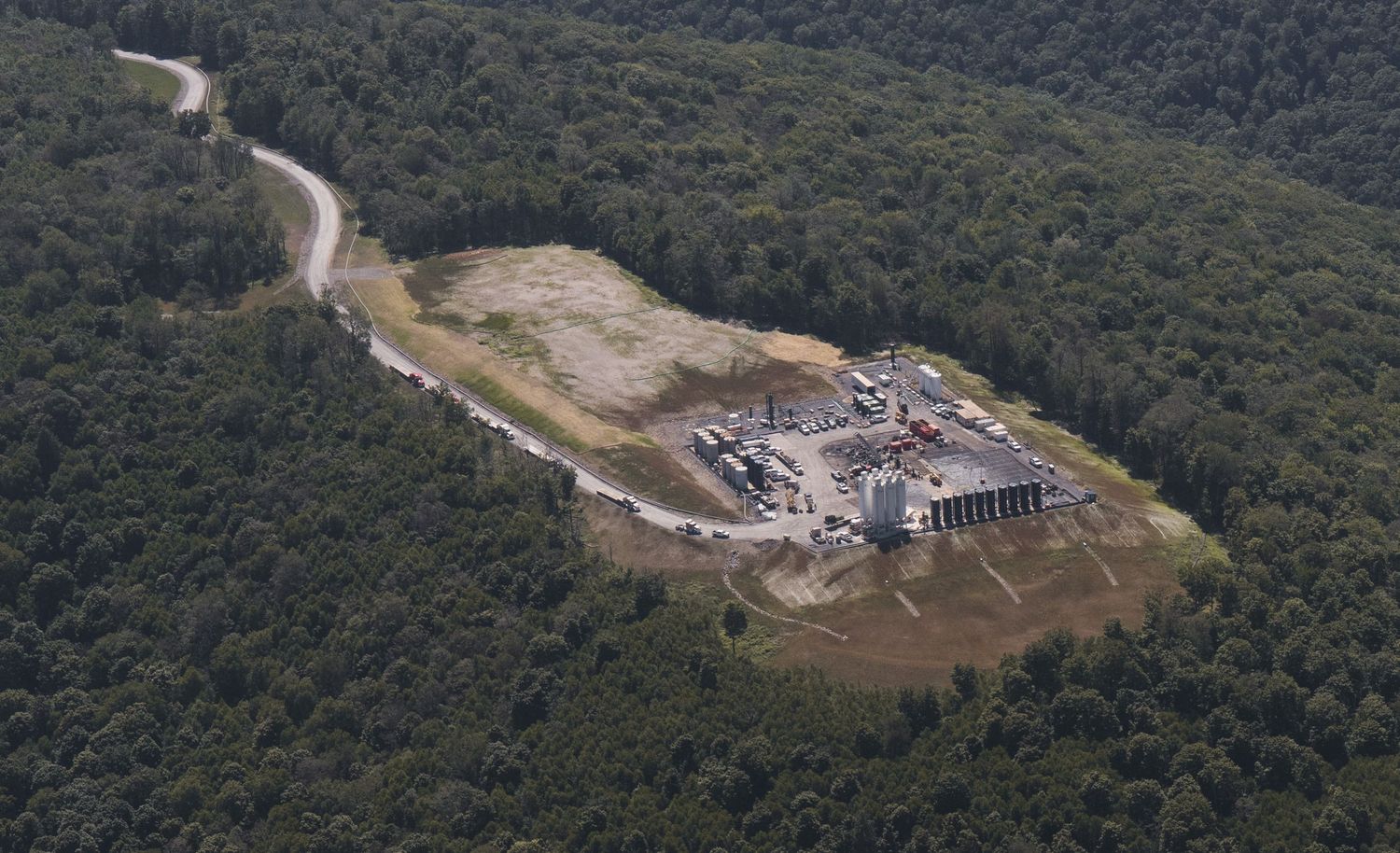
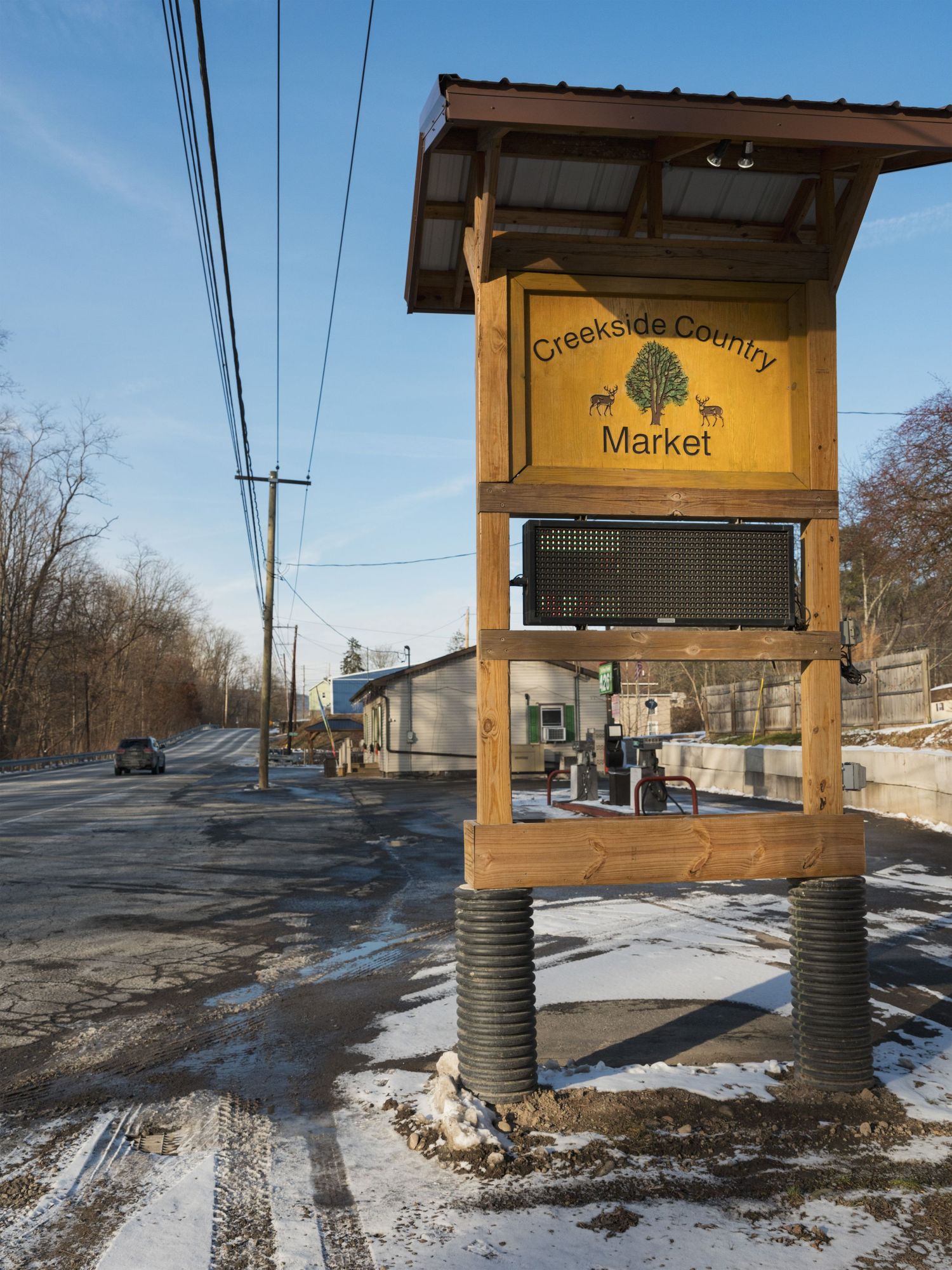
From Barb’s back porch, sipping iced tea, it’s hard to tell. At least on the surface. The Loyalsock Valley is idyllic with its steep wooded hillsides, carved streambeds, and lush foliage. Barb’s home sits beside the creek, nestled in a grove of sycamores and pines. A pair of horses graze in a modest pasture. Zoom out, however, and the picture becomes clearer. Just a mile north is a water impoundment extracting millions of gallons each day from the creek. Across the valley, Tarklin ridge supports a 3-million dollar access road to a series of frack pads, representing the first phase of PGE’s project.
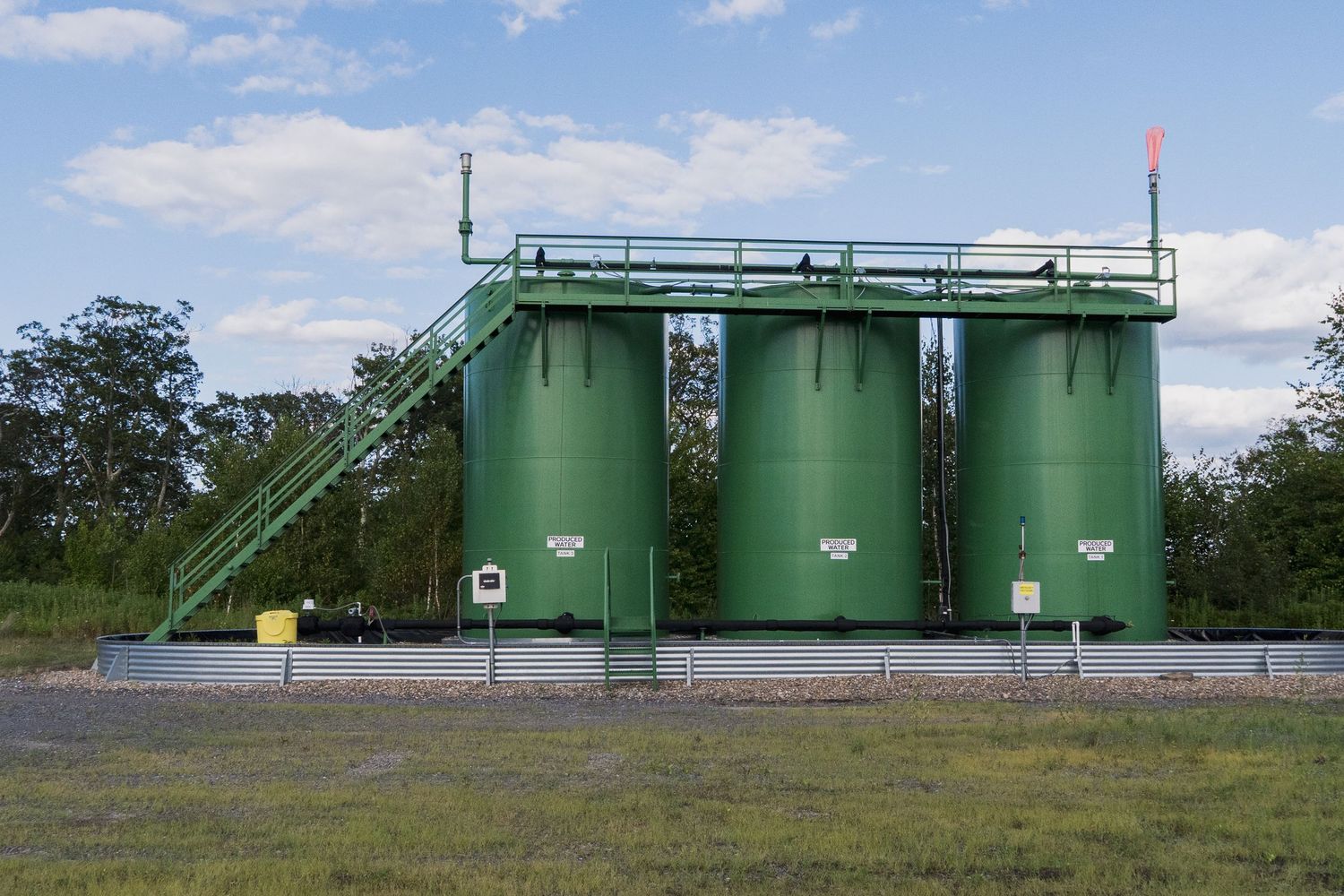
From the ridge PGE’s drill rigs are able to bore down about 6,000 feet (depth can vary by region) to the bottom of the fresh water aquifer, and laterally 10,000 feet. A surface casing composed of steel pipe is used to prevent contamination of groundwater, and cement is pumped down to the bottom to separate the wellbore from the aquifer. Once complete, the fracturing process involves detonating explosives to forcefully pump fracking fluid composed of water and chemicals combined with sand into the well, breaking up the shale below and releasing the gas for collection.
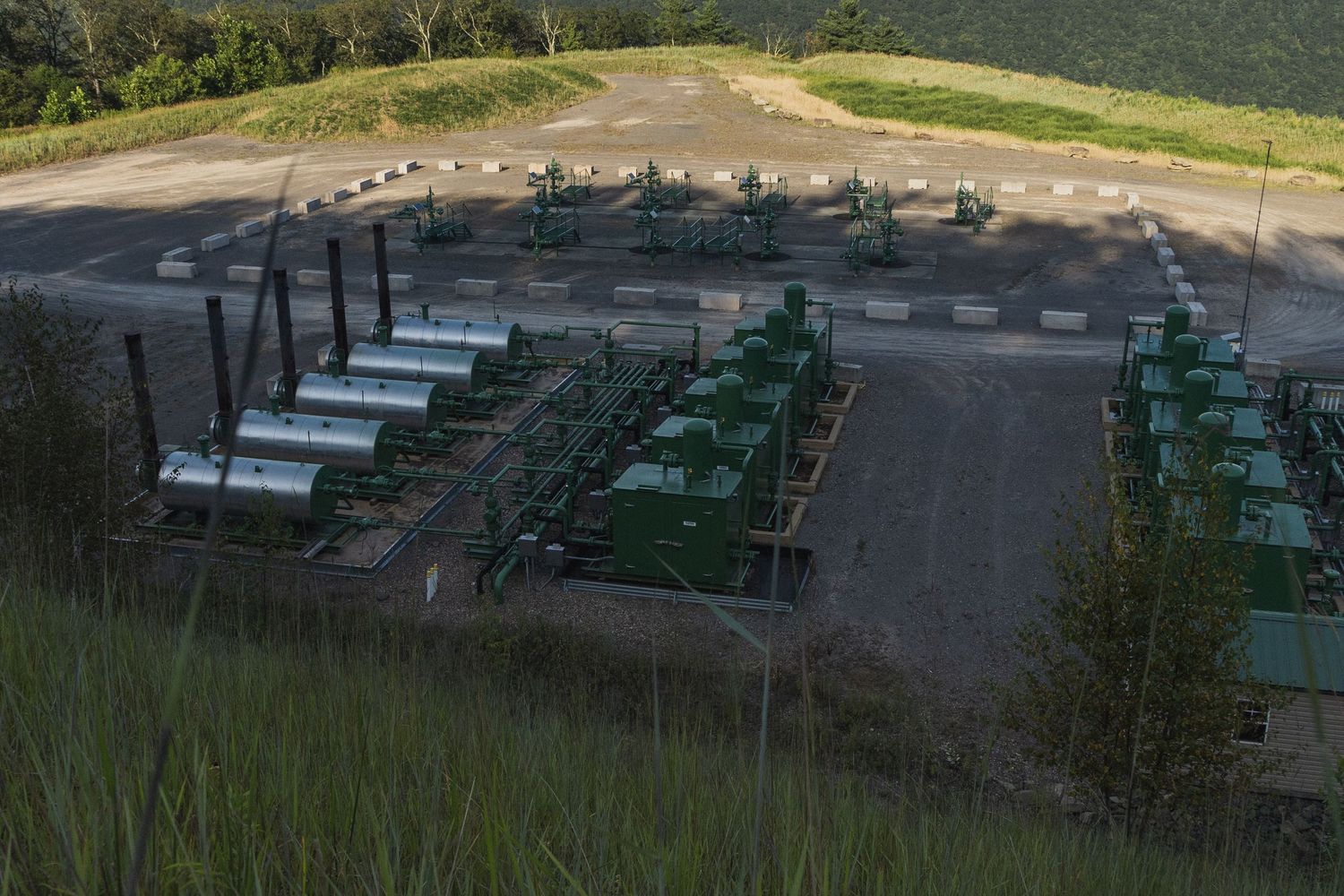
The process typically requires 5-6 million gallons of fluid, 1% (or 50-60,000 gallons) of which is made up of chemicals. The chemicals are proprietary and the exact formulas are kept hidden from the public. Some common additives include hydrochloric acid, benzisothianzolin (biocide), butoxy ethanol (solvent), acetone, ammonia, benzene, and boric acid, but there is no precise list. .
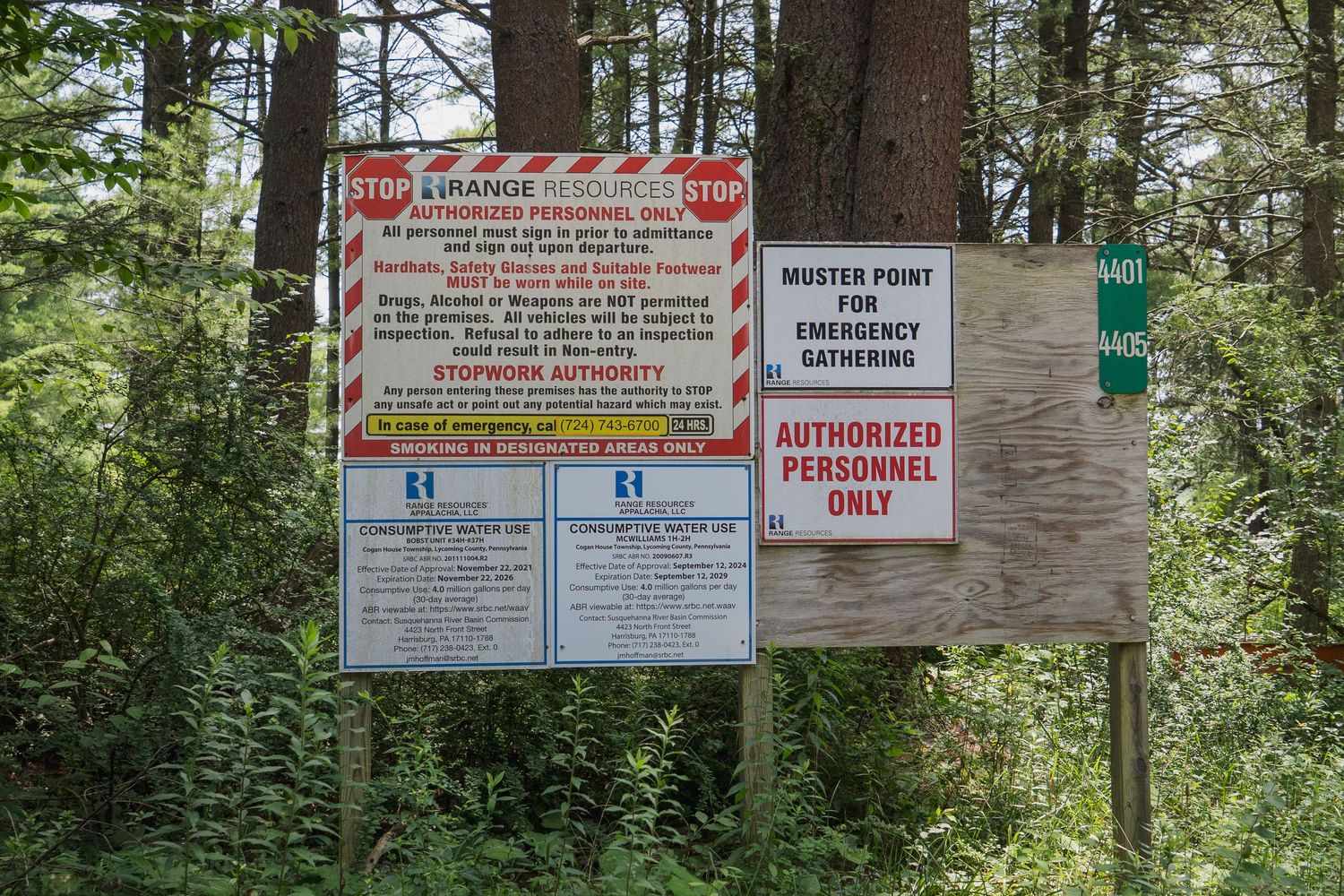
The distances required and the area of gas being extracted means PGE and and other companies must purchase mineral rights from private landowners. In the case of Butternut Grove Rd, only a few residents have held out. Of those, Barb’s creek frontage represents the largest gap in PGE’s mineral rights, rights she says she has no intention of selling. “I am the last holdout on this side of the creek” she says “everyone else has leased.” It’s more than just property to her, it’s her family home. “My mom remembered him (her grandfather) saying ‘don’t ever lease the cabin land, don’t ever sign a mineral lease.’” Barb built her entire life around her small corner of paradise on the Loyalsock. When she inherited the family home she converted it from the summer cottage it once was, to the home it became.
When the creek flooded in 2011, washing away the properties of others in her neighborhood, floating vehicles away and crumbling bridges, Barb’s house survived. Waterlogged as it was, it may have been easier to rebuild but instead she remodeled once more, preserving her family home and history.
Barb still swims in and paddles on the creek to this day, although she says it’s different from the way it was when she was younger. “I had a younger sister, she was four years younger than I, and we used to go out in our old rowboat on a weekly basis in the summer and look for hellbenders.” The hellbender, a large aquatic salamander native to Pennsylvania, is the river equivalent of a canary in a coal mine. Hellbenders need cold, clean, flowing water to thrive.

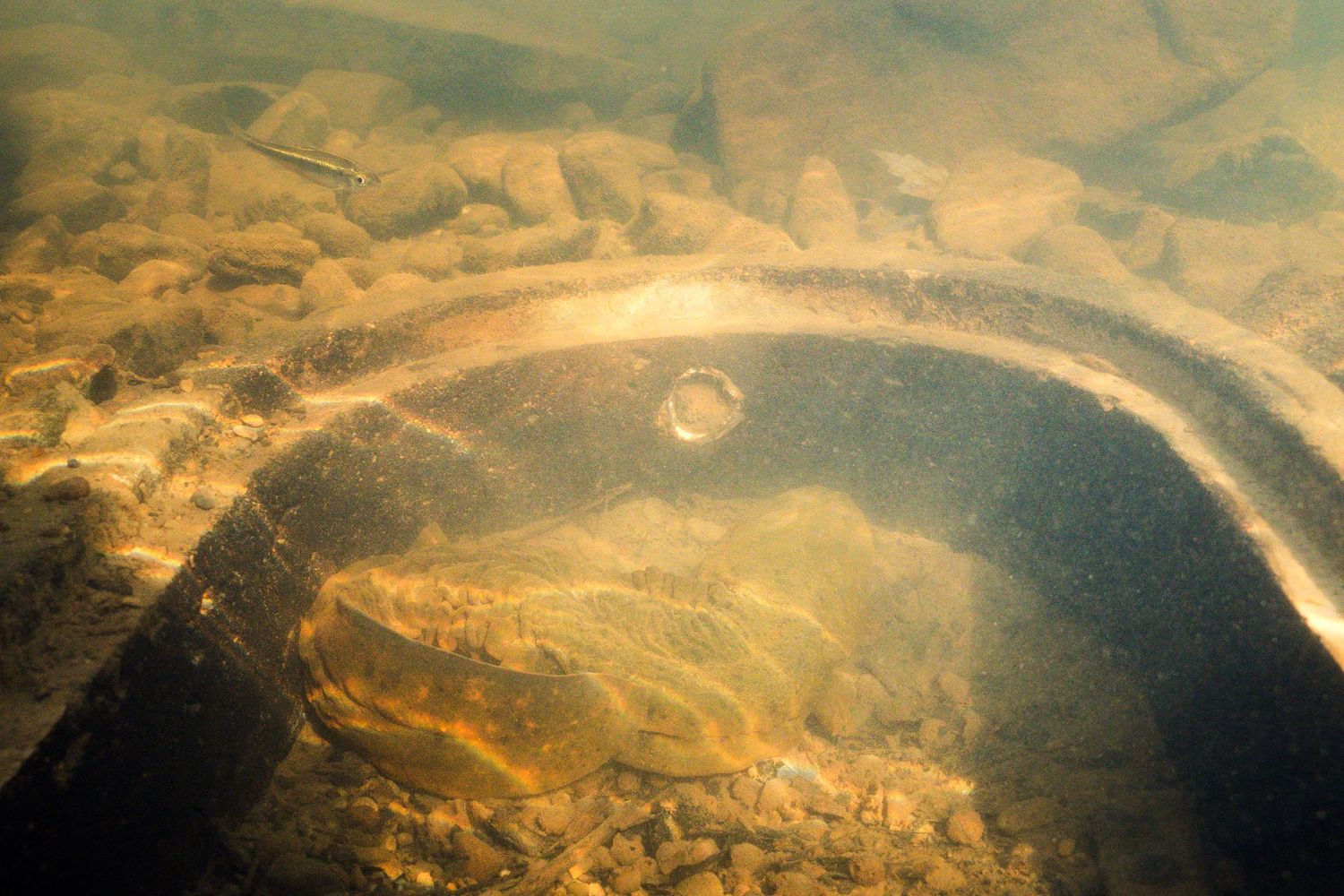
According to biologist and hellbender researcher Matt Kaunert, they’re a clear indicator of the health of a waterway. A good population of hellbenders is indicative of a healthy creek. In the Loyalsock where they were once numerous enough for Barb to see every day as a child, they’ve all but disappeared. These declining numbers reflect a larger national trend. Despite the fact that hellbenders have declined as much as 70% in their native habitat since 1970, all attempts to protect them federally under the Endangered Species Act have failed.
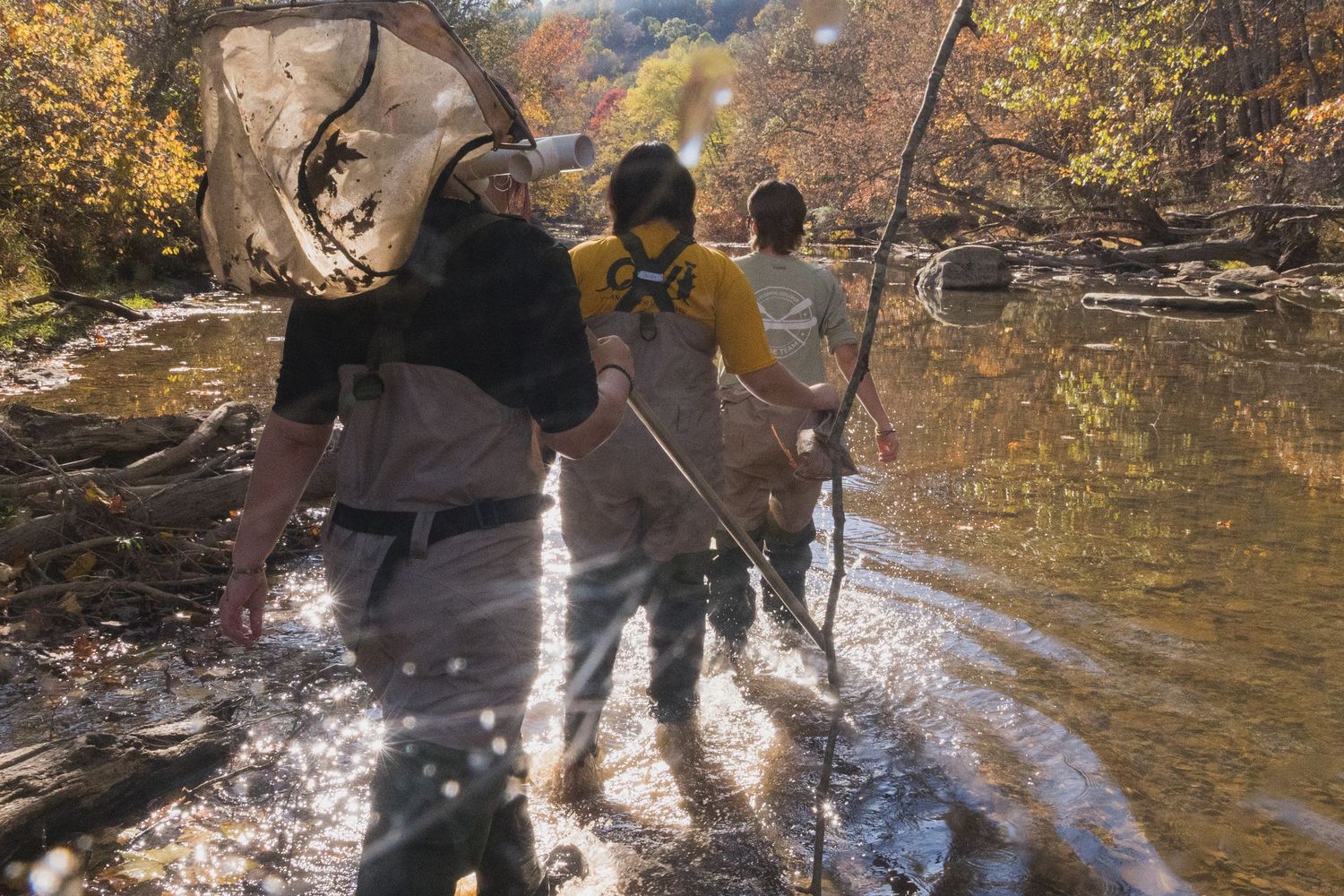
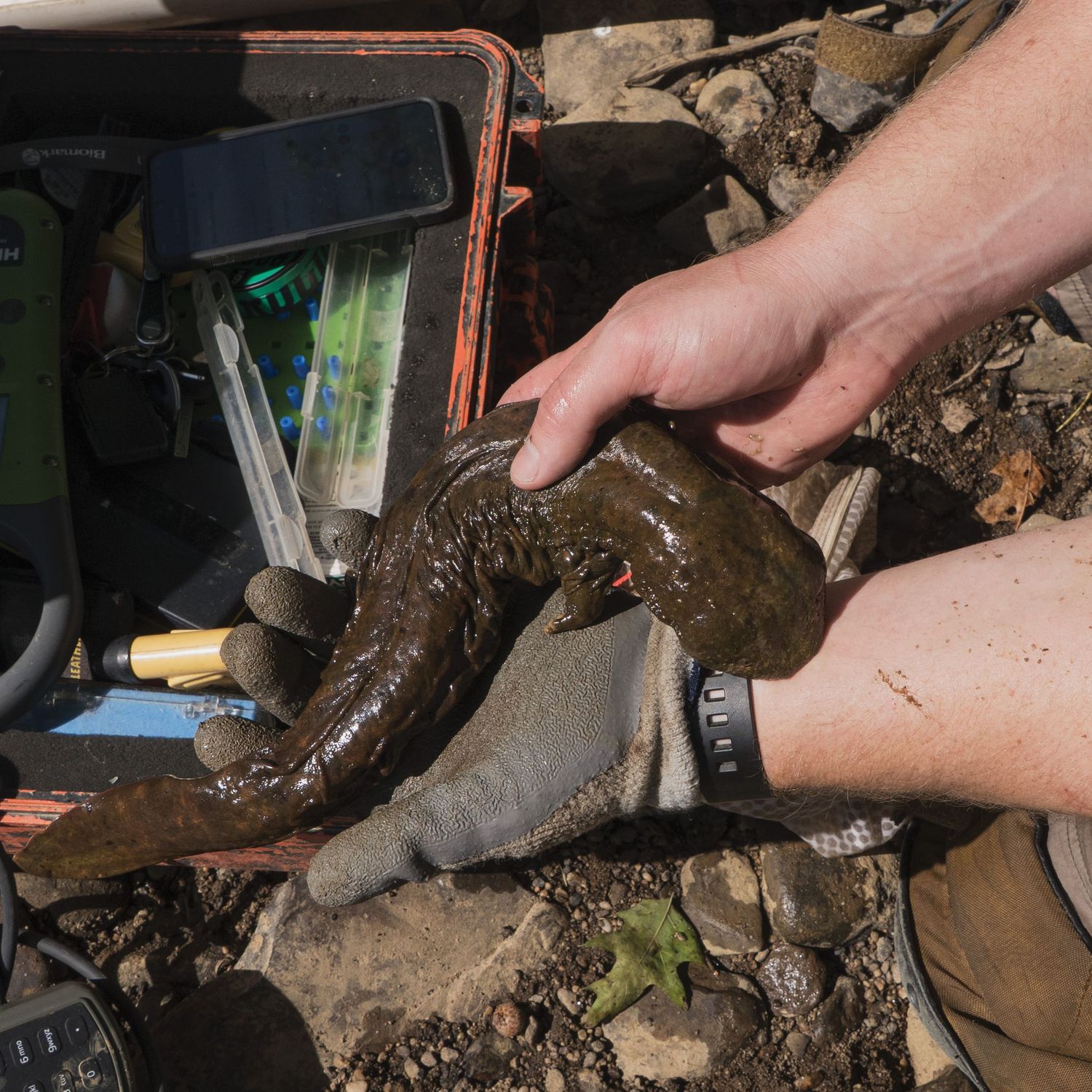
Kaunert says that the root of the problem is nest failure. Hellbenders lay their eggs under rocks in the creekbed, an inhospitable environment in the best of conditions. Once the eggs are laid the male hellbender (known as a guardian male) stays with the nest through the winter, protecting it from predators and ensuring the young survive. According to Kaunert, nests fail when males either abandon the young due to external stressors like changing water levels and temperatures, sedimentation, pollution, and human disturbance. According to a 2024 surface water withdrawal application from PGE to the Susquehanna River Basin Commission (SRBC), historic withdrawal from the Loyalsock by PGE averaged 5.8 million gallons (MG) per well and 1.5 MG of consumptive use per day. The new withdrawal quantity as proposed by the application would average 15 MG with consumptive use of 4 MG per day, about a 160% increase.
According to valley local and fisheries biologist Harvey Katz, this is all bad news for both the hellbender, and the watershed as a whole. Low water means higher temperatures, which means that there is less oxygen in the water. This places stress, not just on hellbenders, but other native amphibian species, and local trout populations. Katz says that at temperatures above 77 degrees, brook trout show signs of stress associated with low oxygen levels.
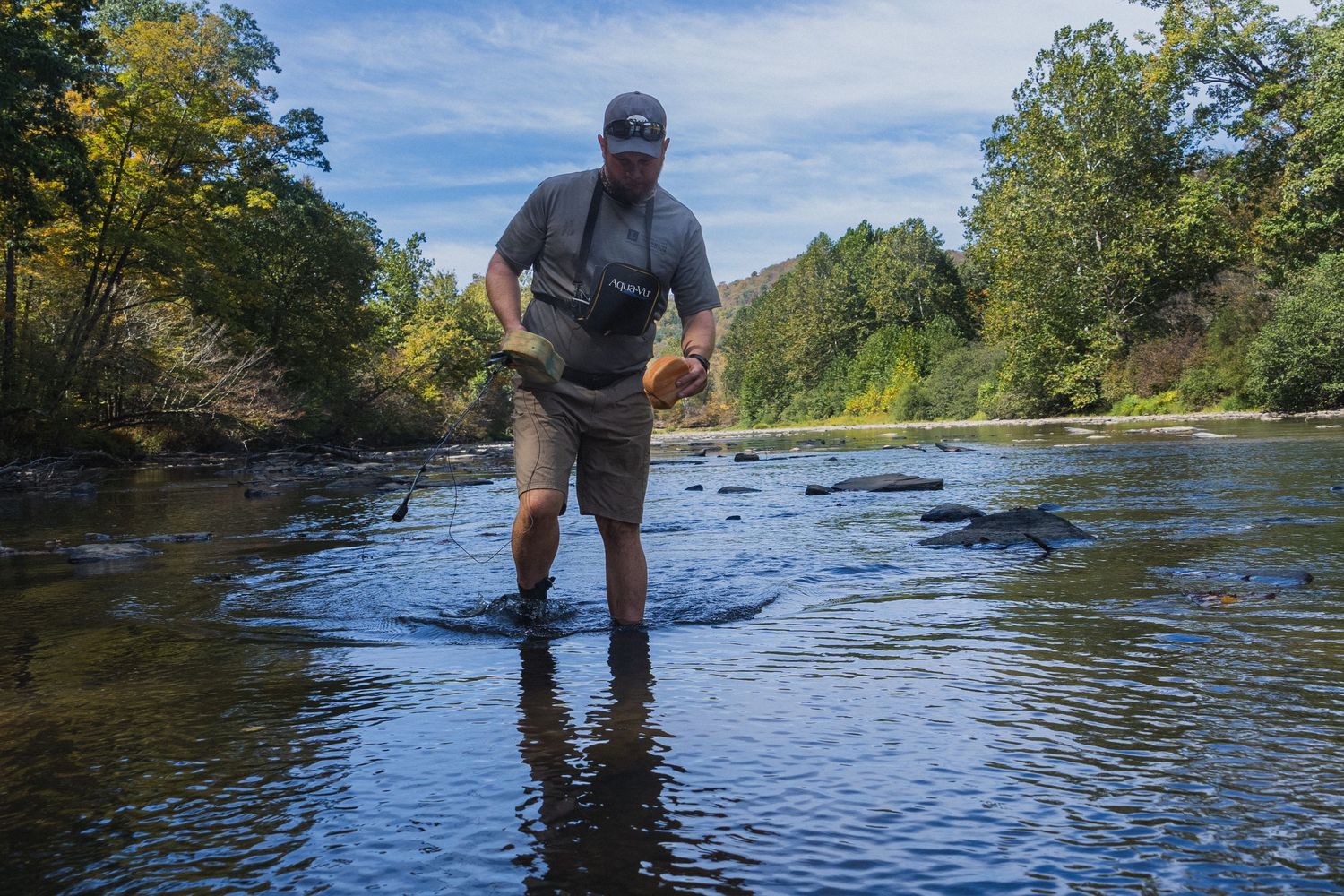
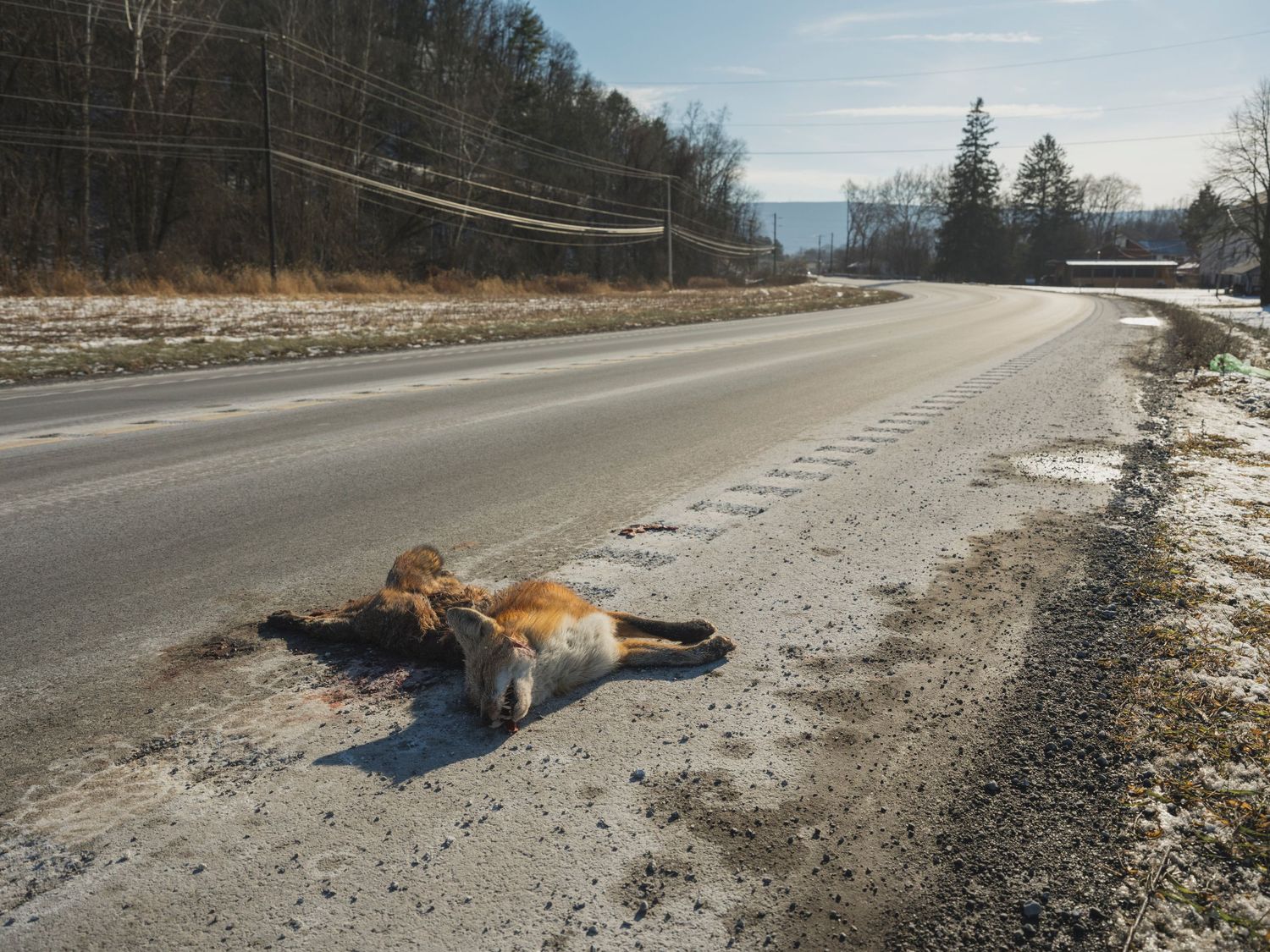
PGE’s project is just the most recent in a long line of energy related disturbances to the Loyalsock Valley. In 2016 an 8-inch Sunoco pipeline ruptured. 55,000 gallons of gasoline spilled into Wallis Run, a tributary of the Loyalsock. In 2017, a well operated by Inflection Energy leaked 63,000 gallons of drilling flowback waste into the Loyalsock when a worker fell asleep during a waste transfer. In 2022 during the construction of the Shawnee Water Withdrawal PGE incurred 12 violations of the Clean Streams Act including (but not limited to) blockage of the stream with a coffer dam without approval, discharging pollutants and sediments into the creek, failure to protect water quality from erosion, failure to obtain approval from the Dept. of Environmental Protection for changes to work plans.
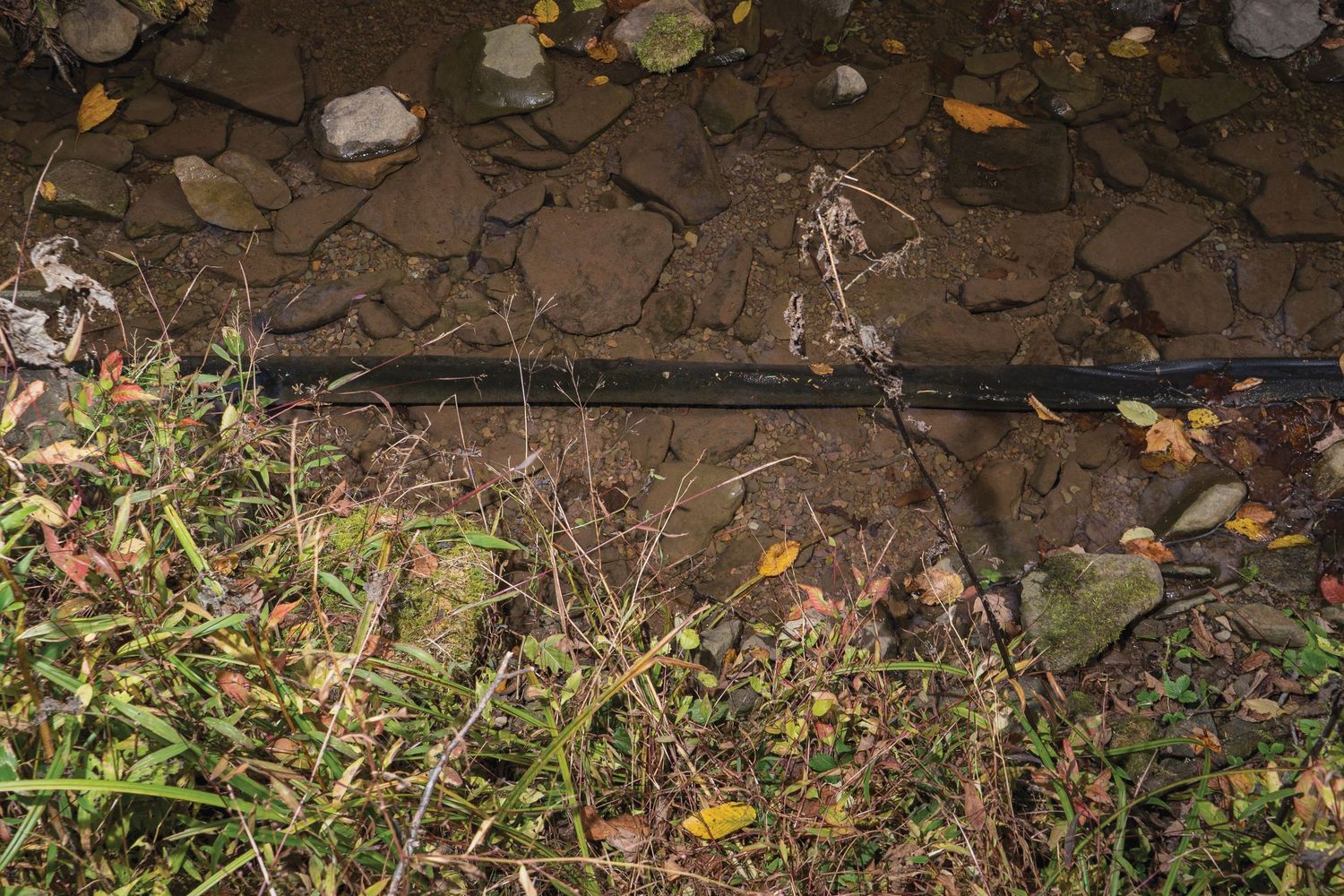
Fabric sheathing left behind after the 2016 Sunoco rupture.
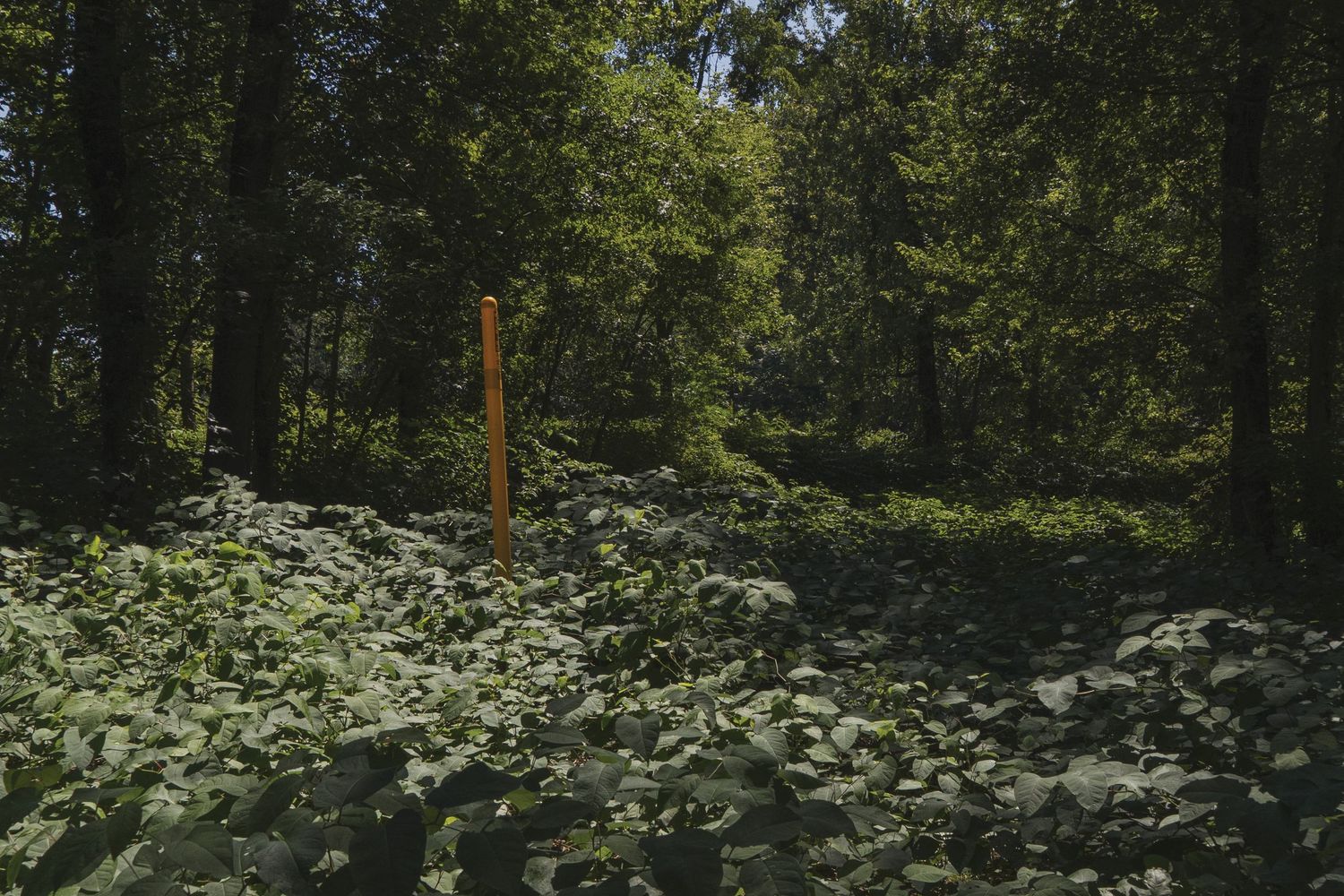
A pipeline marker protrudes above a field of invasive knotweed. Knotweed is often transferred from lower elevations to mountaintops in the tire and boot treads of the gas industry.
“It is: touch one strand and the whole web trembles” says Barb, describing the lower water levels, increased temperatures, and sediment plumes she’s experienced in recent years. When she first learned about the project, Barb and her neighbors formed a group to fight it. “I had Sunday afternoon meetings in my living room” she says, “we passed the hat and got $25,000 to hire an attorney.” Environmental attorney Lauren Williams combed through the multitudes of documents and correspondences between Pennsylvania’s Department of Conservation and Natural Resources (DCNR), PGE, and the residents of Butternut Grove Rd, finding inconsistencies in DCNR’s enforcement and interpretation of existing laws and policies.
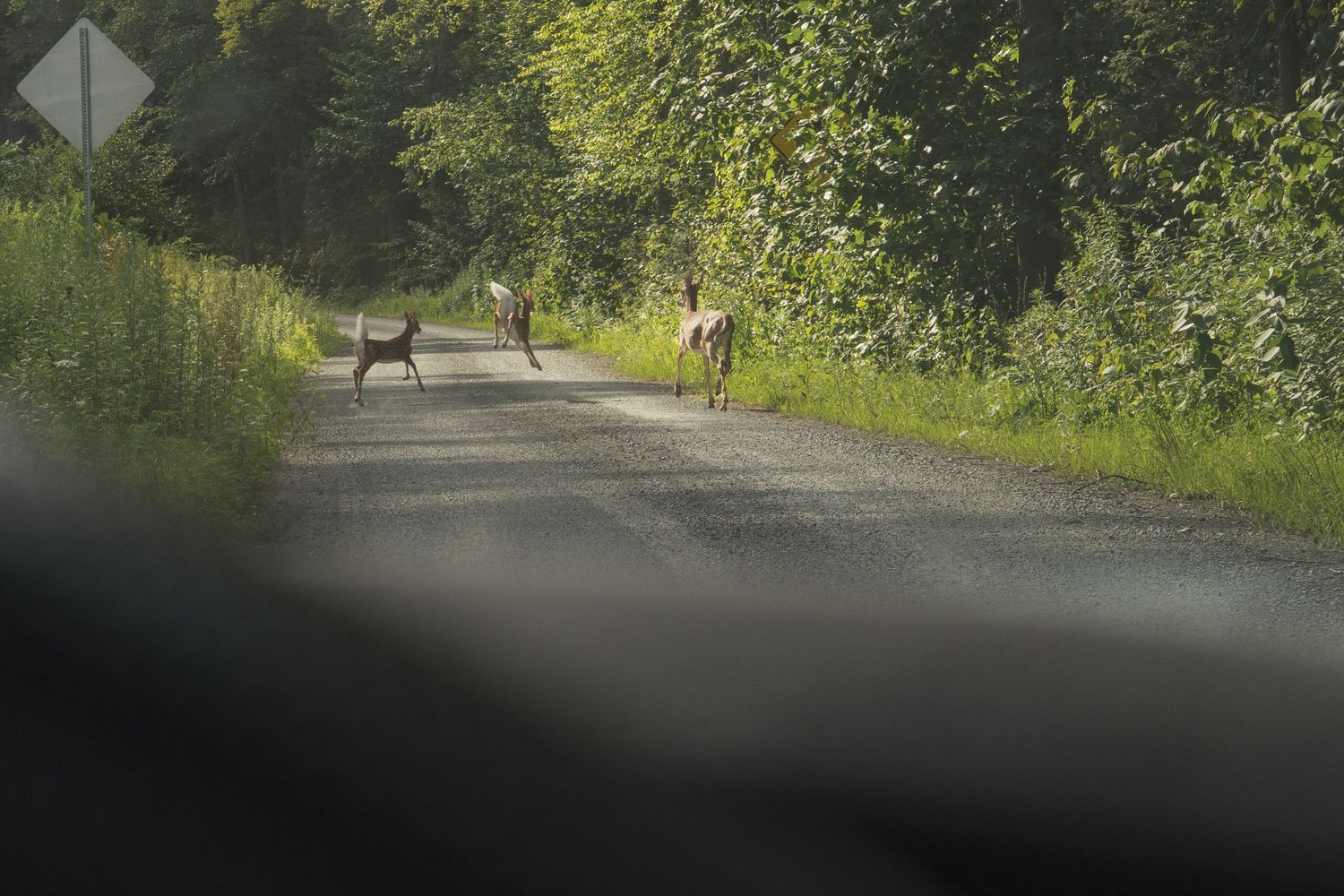
White tailed deer run down a gravel access road between well pads.
The most troubling of these involved a 2015 moratorium on new energy development in state forest land. According to Barb “DCNR realized that they could not let PGE do this fracking project with the leases that had been written, so they just wrote new ones.” This was confirmed by Williams who explained that much of DCNR’s funding comes from leasing state land for energy interests, and that the Butternut Grove Rd. residents had legal grounds to pursue a lawsuit, but due to the immense cost required to bring legal action against the gas industry, the suit was never filed.
In October of 2025, Barb received a new letter in the mail from PGE. Unlike those in the past asking her to lease her mineral rights, this one was legally required. It informed her that her home was within 1000 feet of a new natural gas development project. PGE was beginning to lay the groundwork for phase two of its Saluda Prospect atop Jacoby Mountain, this time, on Barb’s side of the creek.
In April of 2026, local pressure forced Pennsylvania's Department of Environmental Protection to hold a public hearing about the project's permitting process. Barb was among the citizens who gave verbal testimony at the hearing. She continues to fight for her home and community.
Installation
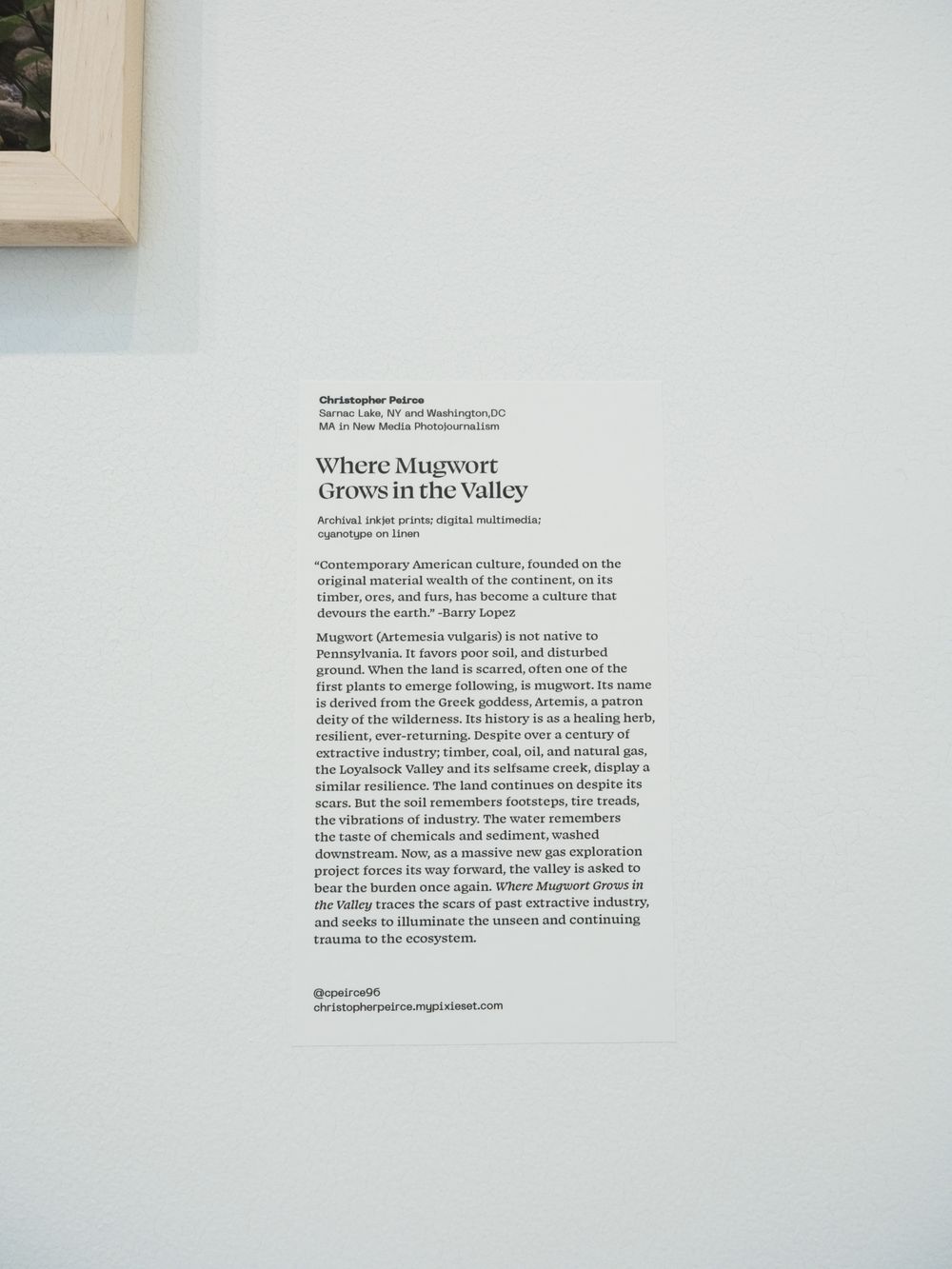
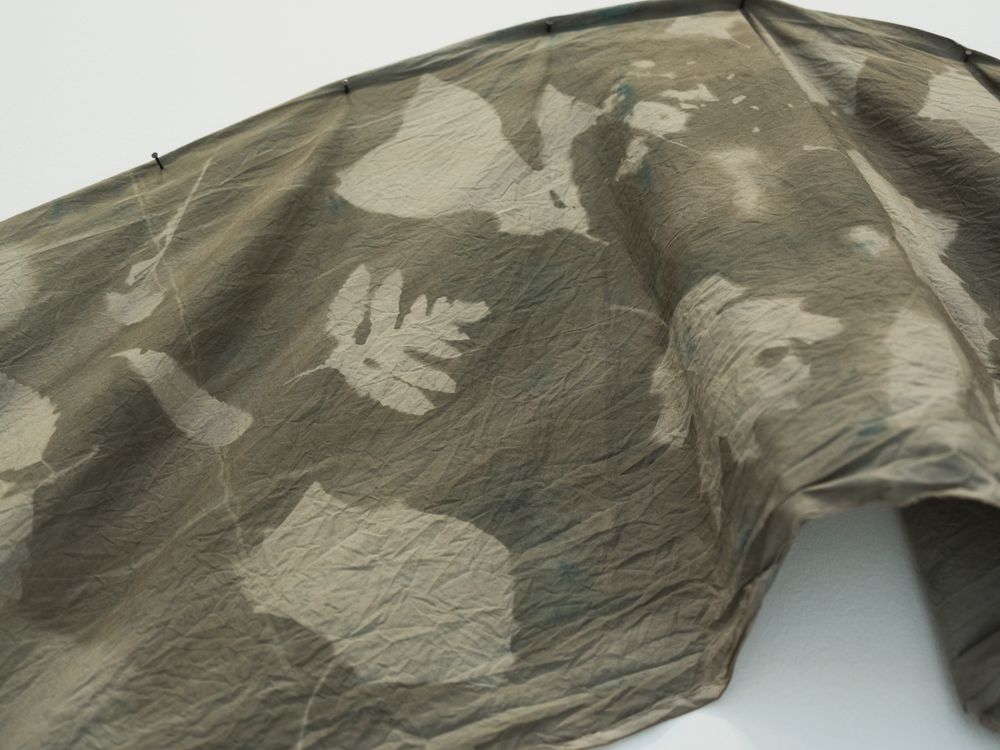
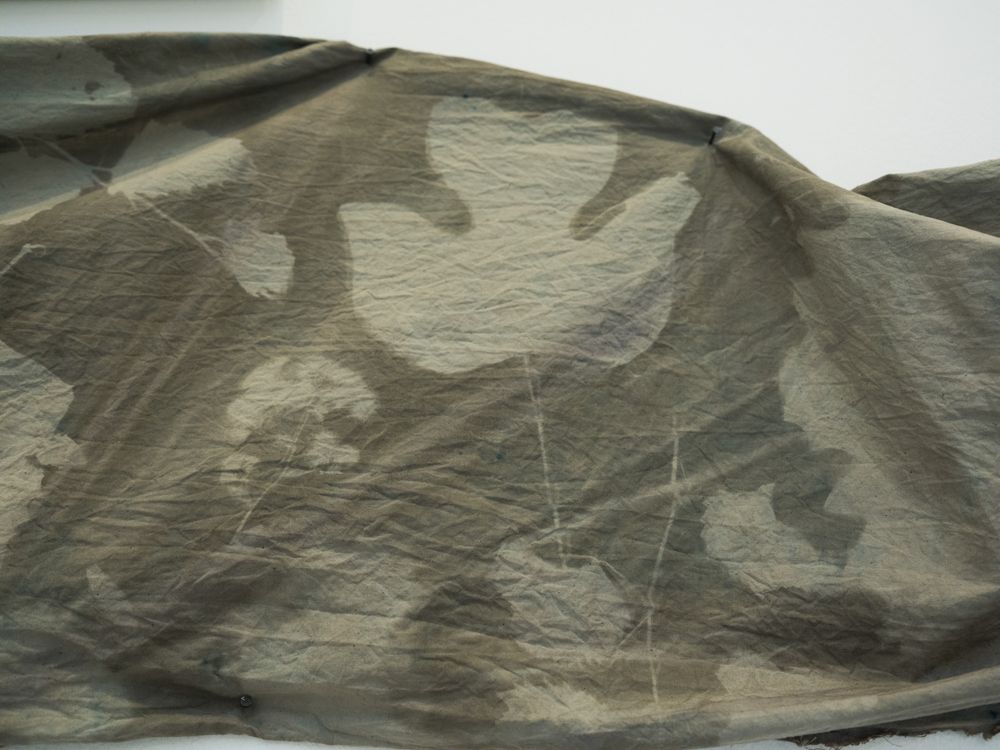
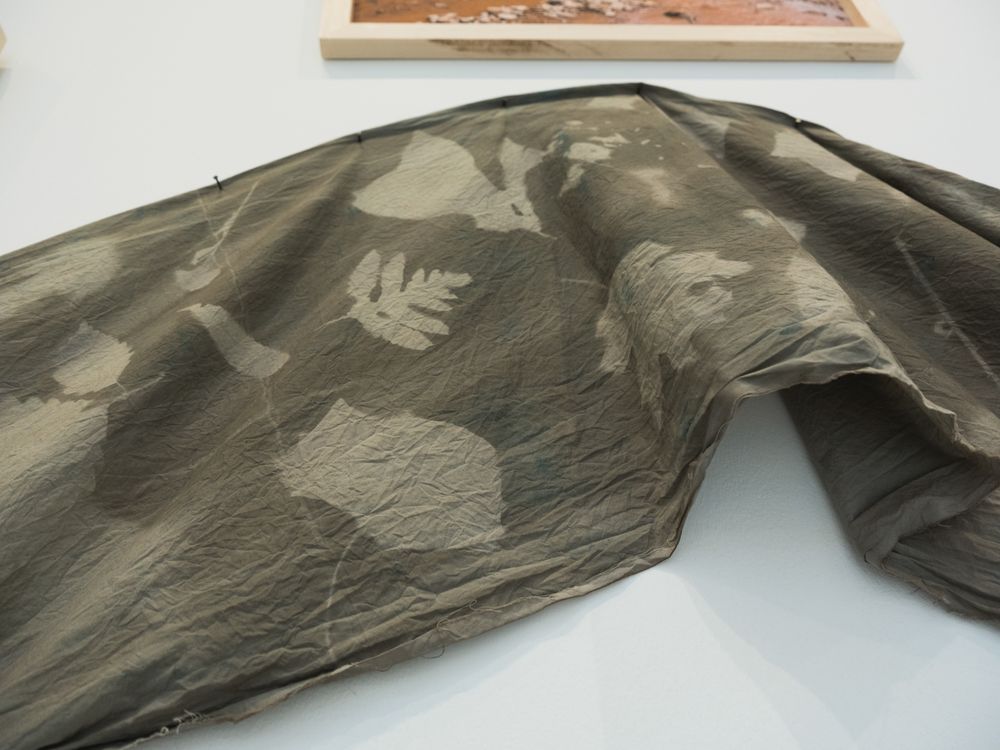
Atrium: Corcoran School of the Arts & Design's 2026 NEXT Festival. Hand-framed archival inkjet prints. Cyanotype on linen of streamside plants, bleached and tannin toned with leaf litter collected from the Loyalsock Valley.